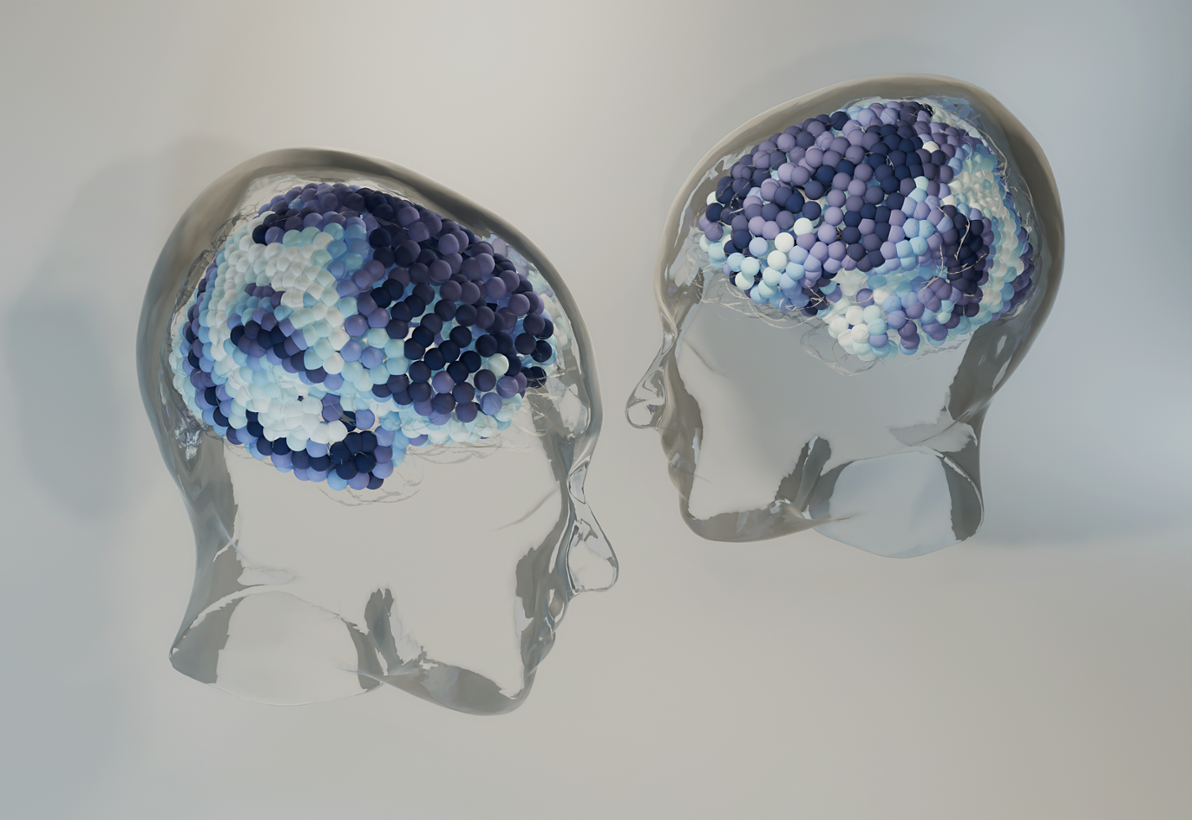
We are excited to announce the return of our Virtual Course Series: "Digital Brain Twins in Clinical Research" for the Fall/Winter 2026 edition!
This comprehensive course introduces participants to the basic concepts and methods for reproducible biology founded personalized brain network modeling and simulation. Students will gain knowledge about how to construct models, process multimodal imaging data for creating individualized models, run simulations and use supporting neuroinformatics tools such as the Charité/BIH Virtual Research Environment, workflows and build interfaces to related tools via APIs. Students will understand how to run brain simulations to address medical problems and have a good understanding of the open-source neuroinformatics platform The Virtual Brain.
Course Details
- Dates and Hours: Nov 12, 2026 – Nov 27 2026, 16:30 to 18:30 (on Nov 20th from 17 to 19)
- Location: Online
- Language: English
- Cost: Free
- Requirements for participation: good English language skills and basic programming skills (Python, Matlab)
Course Content
This module provides basic knowledge on digital brain twins in clinical research. Requiredinterdisciplinary methods will be introduced. A focus will be set on the open-source simulationplatform TVB.
Course Overview
- Theoretical background of large-scale brain network modeling
- Processing of brain images for individualization of brain network modeling
- Concepts of nonlinear dynamics
- Workflows on high-performance computers
- Parameter optimization and model inference
- Application of brain network modeling for clinical questions
- Introduction to the medical condition targeted through brain simulation
- Visualizations of multimodal brain dynamics, ontologies, machine learning, AI, graph theory
- Making use of digital Research Infrastructures used for data integration and simulation in compliance with the EU general Data Protection Regulations (GDPR)
- Scientific operations maturity
Program
- Session 1, Nov 13, 16:30 - 18:30:
“The Virtual Brain - Overview” Prof. Dr. Petra Ritter
- Session 2, Nov 13, 16:30 - 18:30:
“Introduction to TVB modeling framework and The Virtual Brain Ontology for reproducible and comparable computational modeling” Leon Martin, MSc.
- Session 3, Nov 16, 16:30 - 18:30:
"Secure Processing Environment, containers and reproducible processing” Dr. Michael Schirner, Marc Sacks, MSc & David Daubner, MSc.
- Session 4, Nov 17, 16:30 - 18:30:
“Digital Twins, Intelligence & Plasticity” Dr. Michael Schirner & Luca Brandt, MSc.
- Session 5, Nov 18, 16:30 - 18:30:
“Integrating biological knowledge in brain network models & modeling neurodegeneration” Dr. Leon Stefanovski & Luise da Costa Zemsch, MSc.
Session 6, Nov 19, 16:30 - 18:30:
“Scientific Operations Maturity: Automation and artificial intelligence” Dr. Michael Schirner & Leon Martin, MSc.
Session 7, Nov 20, 17:00 - 19:00:
“Brain network model optimization and multiscale co-simulation” Marius Pille, MSc. & Dr. Dionysios Perdikis
- Session 8, Nov 23, 16:30 - 18:30:
“Understanding principles of brain function in the computational macaque and mouse model” Halgurd Taher, MSc & Jeehye An, MSc
- Session 9, Nov 24, 16:30 - 18:30:
“In silico optimization of brain stimulation” Tiago Felicetti, MSc.
- Session 10, Nov 25, 16:30 - 18:30:
“Modeling mechanisms of consciousness” Dr. Qin Liu & Lion Deger, MSc. & Valery Bragin, MSc.
- Session 11, Nov 26, 16:30 - 18:30:
“Modeling mechanisms of psychosis” Dr. Konstantin Bülau & Christoph Hüttl
- Session 12, Nov 27, 16:30 - 18:30:
“TVB-Positron Emission Tomography & In silico drug discovery and testing” Dr. Halgurd Taher & Jennifer Them, MSc. & Rico Schmitt
Course Credits
- 2 ECTS
Software
Open-source software The Virtual Brain can be installed on own notebook/computer (runs on MacOS, Linux, Windows) or used via the research infrastructure EBRAINS (requires free registration at https://ebrains.eu/register/).
Find out More
Don't miss this opportunity to enhance your understanding of brain network modeling and simulation! Registration is free but mandatory, and the course can be completed in one semester.
Registration
To register and access the online course, please use the online registration form.
Registration remains open throughout the duration of the course.
Additional Resources
For more information such as session descriptions, reading lists and other resources, please download the information sheet below.
We look forward to your participation in this exciting educational journey!
Check out our YouTube channel for recordings of previous courses